Study suggests drunk witnesses are less likely to remember a suspect's face
Researchers have tested whether intoxicated people can be reliable witnesses when it comes to identifying a suspect's face after a crime is committed.
View ArticleNew AI-powered tool could enhance traumatic brain injury investigations in...
A team of researchers has developed an advanced physics-based AI-driven tool to aid the forensic investigation of traumatic brain injuries (TBI).
View ArticleEarly education impacts teenage behavior
Researchers explored the long-term effects of preschool expansion in Japan in the 1960s, revealing significant reductions in risky behaviors amongst teenagers. By analyzing regional differences in the...
View ArticleResearchers introduce a brand-new method to detect gunshot residue at the...
Crime scene investigation may soon become significantly more accurate and efficient thanks to a new method for detecting gunshot residues. Researchers have developed the technique that converts lead...
View ArticleGood karma for me, bad karma for you
Many people around the world believe in karma -- that idea that divine justice will punish people who do bad deeds and reward those who good. But that belief plays out differently for oneself versus...
View ArticleSpanking and other physical discipline lead to exclusively negative outcomes...
Physically punishing children in low- and middle-income countries (LMICs) has exclusively negative outcomes -- including poor health, lower academic performance, and impaired social-emotional...
View ArticleEvaluating food safety control strategies for produce industry
Leafy greens can become contaminated with pathogenic E. coli or other bacteria through splashes of soil or contaminated irrigation water in the field, or through processing and handling. Growers and...
View ArticleEconomic burden of tooth decay is highest in deprived groups, new study reveals
The economic impact of dental caries (tooth decay) is disproportionately higher in the most deprived groups, new research finds.
View ArticleExpanding the agenda for more just genomics
A special report outlines opportunities to enhance justice in genomics, toward a world in which genomic medicine promotes health equity, protects privacy, and respects the rights and values of...
View ArticleAcoustic sensors find frequent gunfire on school walking routes
A new study used acoustic sensors that detect the sound of gunfire to show how often children in one Chicago neighborhood are exposed to gunshots while walking to and from school. Results showed that...
View ArticleRecommendations for studying the impact of AI on young people's mental health
Experts highlight the need for a clear framework when it comes to AI research, given the rapid adoption of artificial intelligence by children and adolescents using digital devices to access the...
View ArticleNew therapy reduces reoffending in male offenders with antisocial personality...
A new psychological therapy has been found to reduce rates of violence and aggression among male offenders with antisocial personality disorder (ASPD).
View ArticleWhy some are more susceptible to developing PTSD symptoms than others
People with a more active amygdala (an area in the brain involved in processing information relevant to threats) are more likely to develop PTSD symptoms after experiencing trauma than people with a...
View ArticleGrowing consumption of the American eel may lead to it being critically...
To investigate the prevalence and consumption of endangered eels, a research team examined 327 individual eel products purchased across 86 retailers throughout Singapore. The team discovered prevalence...
View ArticleAdopting zero-emission trucks and buses could save lives, prevent asthma
Researchers used community input to design Advanced Clean Truck (ACT) air-quality model experiments. Community asked for ACT policy simulations that convert 48% of medium- and heavy-duty vehicles into...
View ArticleHousehold electricity three times more expensive than upcoming 'eco-friendly'...
Existing tax policies during the energy transition from fossil fuels to renewable sources will lead to major energy injustices and skewed priorities, new research shows.
View ArticleRole of social workers in addressing marginalized communities bearing brunt...
A researcher spent a year living in a jjokbang-chon, an extremely impoverished neighborhood in Seoul, South Korea. While there, he calculated residents' carbon footprints, finding they contribute much...
View ArticlePolice officers face twice the risk of traumatic brain injuries and PTSD,...
Police officers are more than twice as likely to have traumatic brain injuries compared to the general population.
View ArticleFaster way to solve complex planning problems
Researchers developed a machine-learning-guided technique to solve complex, long-horizon planning problems more efficiently than some traditional approaches, while arriving at an optimal solution that...
View ArticleWhat if Mother Earth could sue for mistreatment?
The study highlights the transformative potential of the Rights of Nature, which views nature as a rights-bearing entity, not merely an object of regulation and subjugation by extractive industries....
View ArticleFinding 'win-win-wins' for climate, economics and justice
In examining how different countries have rolled out climate change mitigation strategies, research has found reasons to be optimistic about preserving our environment while promoting prosperity and...
View ArticleGroundbreaking device instantly detects dangerous street drugs, offering hope...
Groundbreaking device instantly detects dangerous street drugs, offering hope for harm reduction A portable device that instantly detects illicit street drugs at very low concentrations, thereby...
View Article3D printers leave hidden 'fingerprints' that reveal part origins
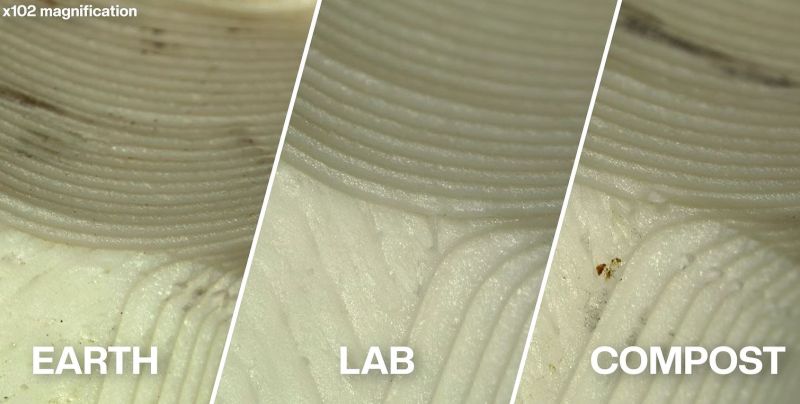
A new artificial intelligence system pinpoints the origin of 3D printed parts down to the specific machine that made them. The technology could allow manufacturers to monitor their suppliers and manage...
View ArticleCollaboration can unlock Australia's energy transition without sacrificing...
Australia can reach net-zero emissions and still protect its natural treasures but only if everyone works together. New research from Princeton and The University of Queensland shows that the country...
View ArticleThree-person DNA IVF stops inherited disease—eight healthy babies born in UK...
In a groundbreaking UK first, eight healthy babies have been born using an IVF technique that includes DNA from three people—two parents and a female donor. The process, known as pronuclear transfer,...
View ArticleGoogle's deepfake hunter sees what you can’t—even in videos without faces
AI-generated videos are becoming dangerously convincing and UC Riverside researchers have teamed up with Google to fight back. Their new system, UNITE, can detect deepfakes even when faces aren't...
View ArticleMexican cave stalagmites reveal the deadly droughts behind the Maya collapse
Chemical evidence from a stalagmite in Mexico has revealed that the Classic Maya civilization’s decline coincided with repeated severe wet-season droughts, including one that lasted 13 years. These...
View ArticleScientists finally solve the mystery of ghostly halos on the ocean floor
Barrels dumped off Southern California decades ago have been found leaking alkaline waste, not just DDT, leaving behind eerie white halos and transforming parts of the seafloor into toxic vents. The...
View ArticleScientists are closing in on Leonardo da Vinci’s DNA
A groundbreaking project is piecing together Leonardo da Vinci’s genetic profile by tracing his lineage across 21 generations and comparing DNA from living descendants with remains in a Da Vinci family...
View ArticleAI breakthrough finds life-saving insights in everyday bloodwork
AI-powered analysis of routine blood tests can reveal hidden patterns that predict recovery and survival after spinal cord injuries. This breakthrough could make life-saving predictions affordable and...
View ArticleScience finally solves a 700-year-old royal murder
Genetic, isotopic, and forensic evidence has conclusively identified the remains of Duke Béla of Macsó and uncovered remarkable details about his life, ancestry, and violent death. The study reveals a...
View ArticleThe hidden brain bias that makes some lies so convincing
People are more likely to believe lies when there’s the possibility of a reward. Neuroimaging shows that the brain shifts into reward or risk mode depending on whether the context involves a gain or a...
View ArticleThe real reason incomes rise and why they drop
Getting ahead financially is mainly about what you earn at work, not what you make from investments. Researchers found that promotions, skills, and better jobs drive most upward income movement. But...
View ArticleThis tiny plant is helping solve crimes
Moss may look insignificant, but it can carry a hidden forensic fingerprint. Because different moss species thrive in very specific micro-environments, tiny fragments can reveal exactly where a person...
View ArticleStanford scientists uncover why mRNA COVID vaccines can trigger heart...
Stanford scientists have uncovered how mRNA COVID-19 vaccines can very rarely trigger heart inflammation in young men — and how that risk might be reduced. They found that the vaccines can spark a...
View ArticleNew DNA analysis rewrites the story of the Beachy Head Woman
A Roman-era skeleton discovered in southern England has finally given up her secrets after more than a decade of debate. Known as the Beachy Head Woman, she was once thought to have roots in...
View ArticleAncient bones reveal chilling victory rituals after Europe’s earliest wars
New evidence from Neolithic mass graves in northeastern France suggests that some of Europe’s earliest violent encounters were not random acts of brutality, but carefully staged displays of power. By...
View ArticleGiving people cash didn’t cause more injuries or deaths
As cash transfer programs expand across the United States, critics often warn that giving people money could spark reckless behavior, leading to injuries or even deaths. But a sweeping 11-year analysis...
View ArticleTiny clump of moss helped solve a shocking cemetery crime
A tiny piece of moss helped expose a cemetery scandal in Illinois, where workers allegedly dug up graves and resold burial plots. By identifying the moss and analyzing its chlorophyll to estimate its...
View ArticleScientists warn fake research is spreading faster than real science
A sweeping new study from Northwestern University reveals that scientific fraud is no longer just the work of a few rogue researchers—it has evolved into a global, organized enterprise. By analyzing...
View ArticleArchaeologists uncover brutal Iron Age massacre of women and children
A prehistoric mass grave in Serbia reveals that more than 77 people—mostly women and children—were deliberately killed in a brutal act of violence about 2,800 years ago. Genetic evidence suggests the...
View ArticleThe da Vinci bloodline is unlocking the genius’s genetic secrets
After centuries of mystery, scientists are edging closer to uncovering Leonardo da Vinci’s biological secrets. A massive 30-year effort has mapped his family across 21 generations, identified living...
View ArticlePeople once risked everything just to keep their hats on
Centuries ago in England, hats weren’t just accessories—they were statements of power and rebellion. Refusing to remove a hat could challenge authority, even in courtrooms and before kings. People...
View ArticleScientists may have debunked one of humanity's oldest habits
Ancient grooves on human teeth, once hailed as evidence of tooth-picking, may simply be the result of natural wear, according to a new study of wild primates. The research also revealed that a common...
View ArticleAncient DNA reveals plague was already killing humans 5,500 years ago
Plague was already a deadly killer 5,500 years ago, long before cities, farming, or the rat-infested conditions usually linked to historic outbreaks. By analyzing ancient DNA from hunter-gatherer...
View ArticleThe Neanderthal “love story” isn’t what the DNA actually shows
Claims that Neanderthal men "preferred" Homo sapiens women may make for catchy headlines, but the underlying research does not actually show prehistoric romance. The genetic evidence only points to an...
View ArticleAncient DNA reveals a chilling secret at China’s 4,000-year-old Shimao city
Ancient DNA from China’s vast 4,000-year-old Shimao settlement is revealing how one of East Asia’s earliest complex societies was organized. Researchers found that its people were largely descended...
View ArticleDNA on the Shroud of Turin reveals centuries of hidden history
DNA traces in the Shroud of Turin reveal a remarkable mixture of human lineages, microbes, plants, animals, and coral accumulated through centuries of handling and travel. The findings do not prove its...
View ArticleCommon medications may change your gut for years
Common medications may reshape the gut microbiome long after the last dose is taken. In a study of more than 2,500 people, researchers found lasting microbial changes linked not only to antibiotics,...
View ArticleDevil’s Arrows: Ancient builders hauled 55,000-pound stones 11 miles for...
Britain’s towering Devil’s Arrows were built from 25-tonne stones hauled at least 18 kilometers from Brimham Rocks around 4,000 years ago. The discovery reveals an astonishing feat of prehistoric...
View Article